Why are online academies and recorded video lectures so easy to confuse?
When you think about how your child should study, you often come across the terms "online academy" and "recorded video lectures" together. Both involve studying at home in front of a screen, but how they actually run is completely different. If you choose without understanding the difference between an online academy and recorded video lectures, you may end up with a study method that doesn't suit your child, so it's important for parents to check the differences in advance.
This article lays out the structural differences between remote academies and recorded video lectures in a table, and introduces criteria for judging which approach suits your child's personality. It is also written so that academy directors and teachers can use it when explaining the differences to parents.
The key to the difference between online academies and recorded lectures: real-time teaching and management
With recorded video lectures, students play pre-recorded videos on their own at whatever time they choose. An online academy, on the other hand, has the teacher run the class in real time at a set time, and also manages assignments and attendance. The differences are summarized in the table below.
Category: Recorded video lectures / Online academy. Class format: Watching recorded videos / Live video class. Interaction: None (one-way) / Two-way, including questions and feedback. Learning management: Self-managed / Teacher manages assignments and attendance. Class time: Freely chosen / Fixed schedule. Best suited for: Students who can study independently / Students who need management and motivation.
As the table shows, the biggest difference is who manages the learning. With recorded lectures, students have to keep track of their own progress and review, whereas in an online academy the teacher checks assignment submissions and attendance and keeps the learning on track. If your child tends to stick to plans on their own, recorded lectures alone may be enough; if not, an online academy may be the more stable choice.
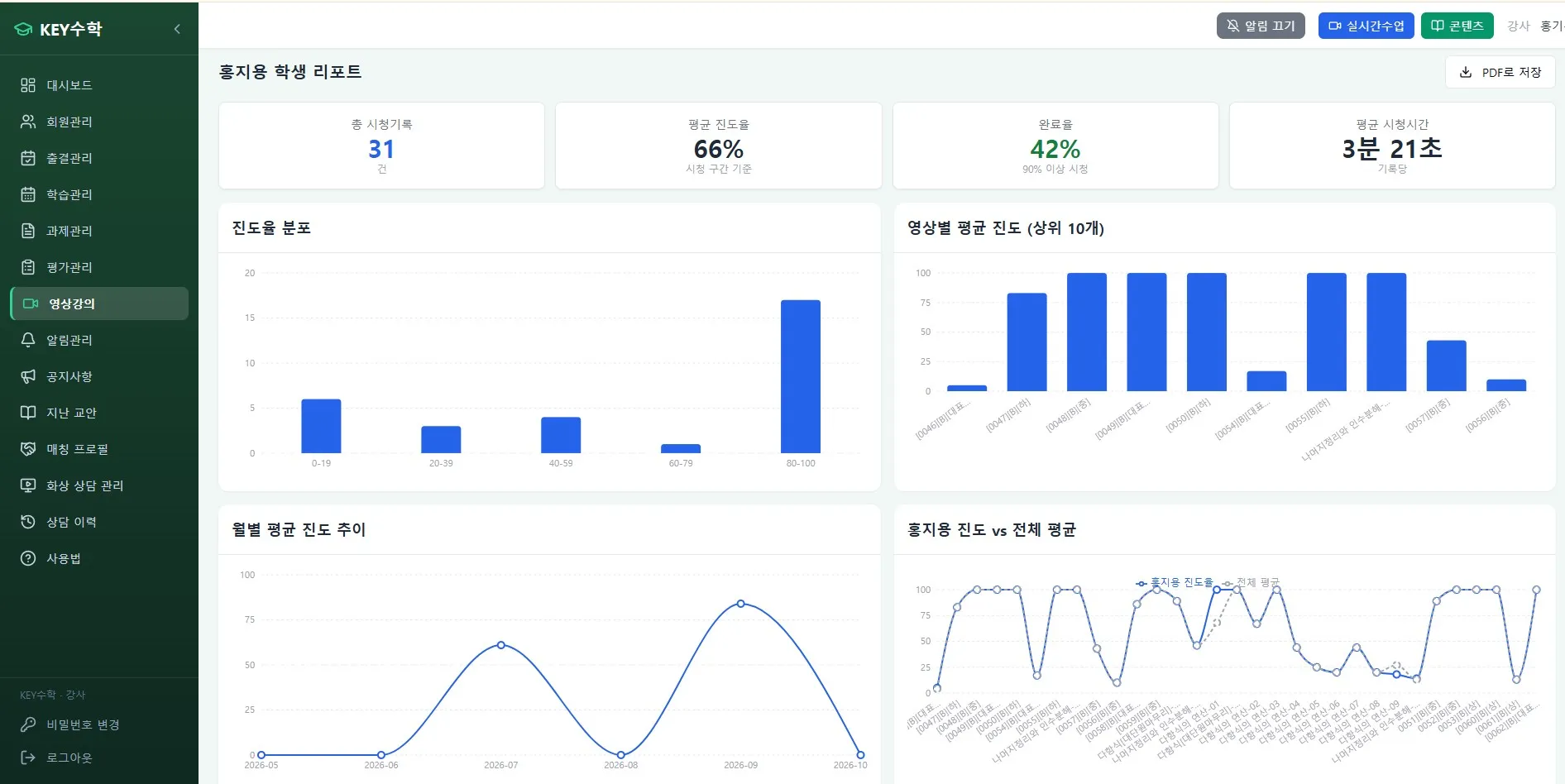
What to check when considering a remote academy
There are a few things parents may want to check before choosing a remote academy.
Live classes - Check whether only recordings are provided, or whether classes are held in real time at set times.
How assignments and attendance are managed - See whether there is a process for giving and checking assignments, and whether attendance is recorded.
Whether questions are possible - Check whether your child can ask the teacher directly during or after class.
Sharing of learning results - See whether parents can regularly check their child's progress and achievement.
Just checking these four points lets you tell whether a service is a simple video-viewing service or a managed online academy.
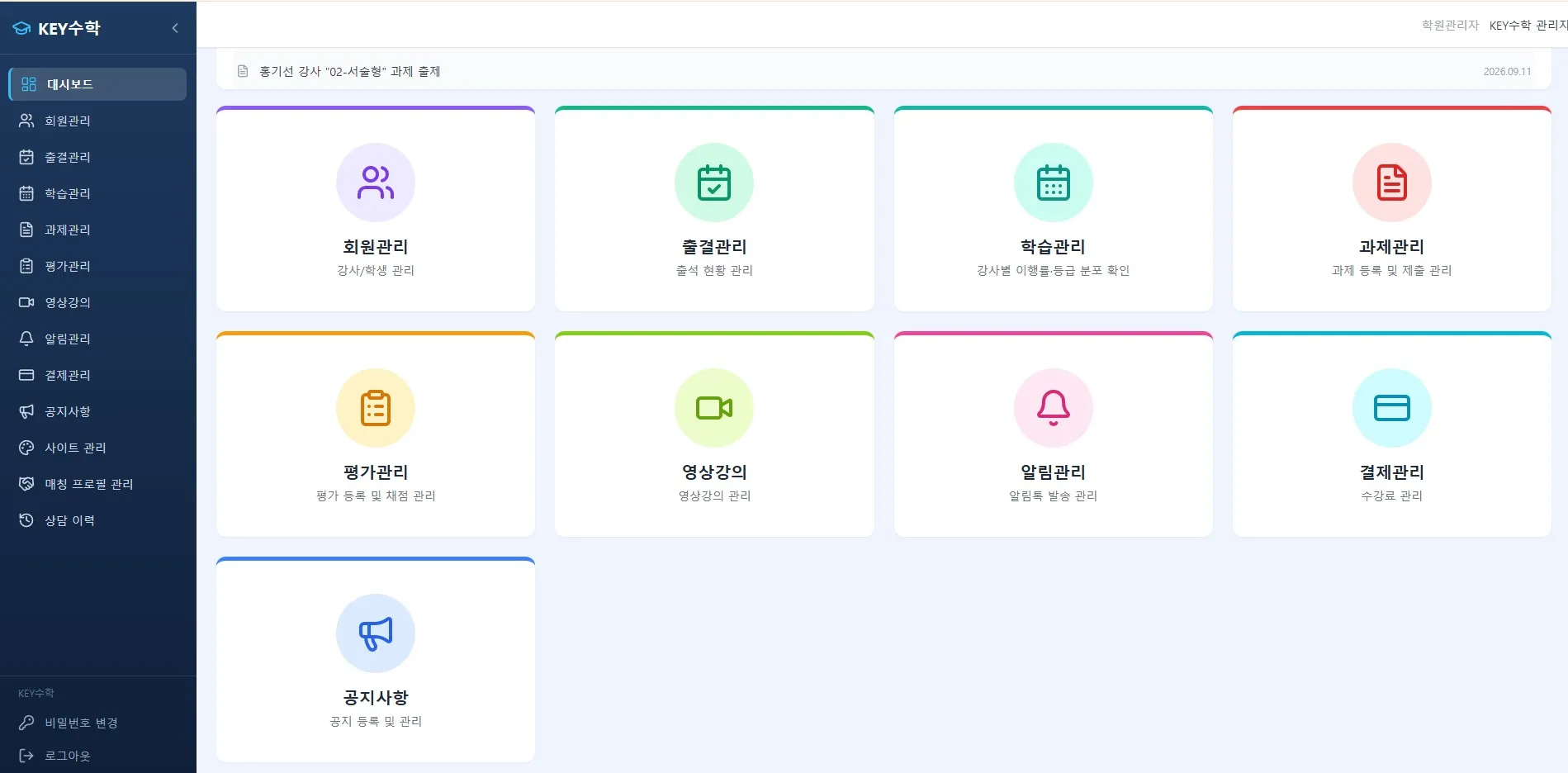
Criteria for choosing based on your child's personality
The same approach doesn't suit every child. It helps to check your child's personality using the criteria below.
Makes and follows their own plans → Recorded video lectures may be efficient
Puts things off unless someone keeps track → An approach that includes management, like an online academy, is a better fit
Wants to ask about parts they don't understand → An online academy with real-time two-way classes is advantageous
Wants to study mainly through repetition or review → The replay feature of recorded lectures is useful
One thing you can try right at home: for about a week, make a study schedule together with your child and check whether they kept to it on their own. If they stuck to the plan well, studying mainly through recorded lectures is fine; if the plan often falls apart, it may be time to consider an online academy that includes management.
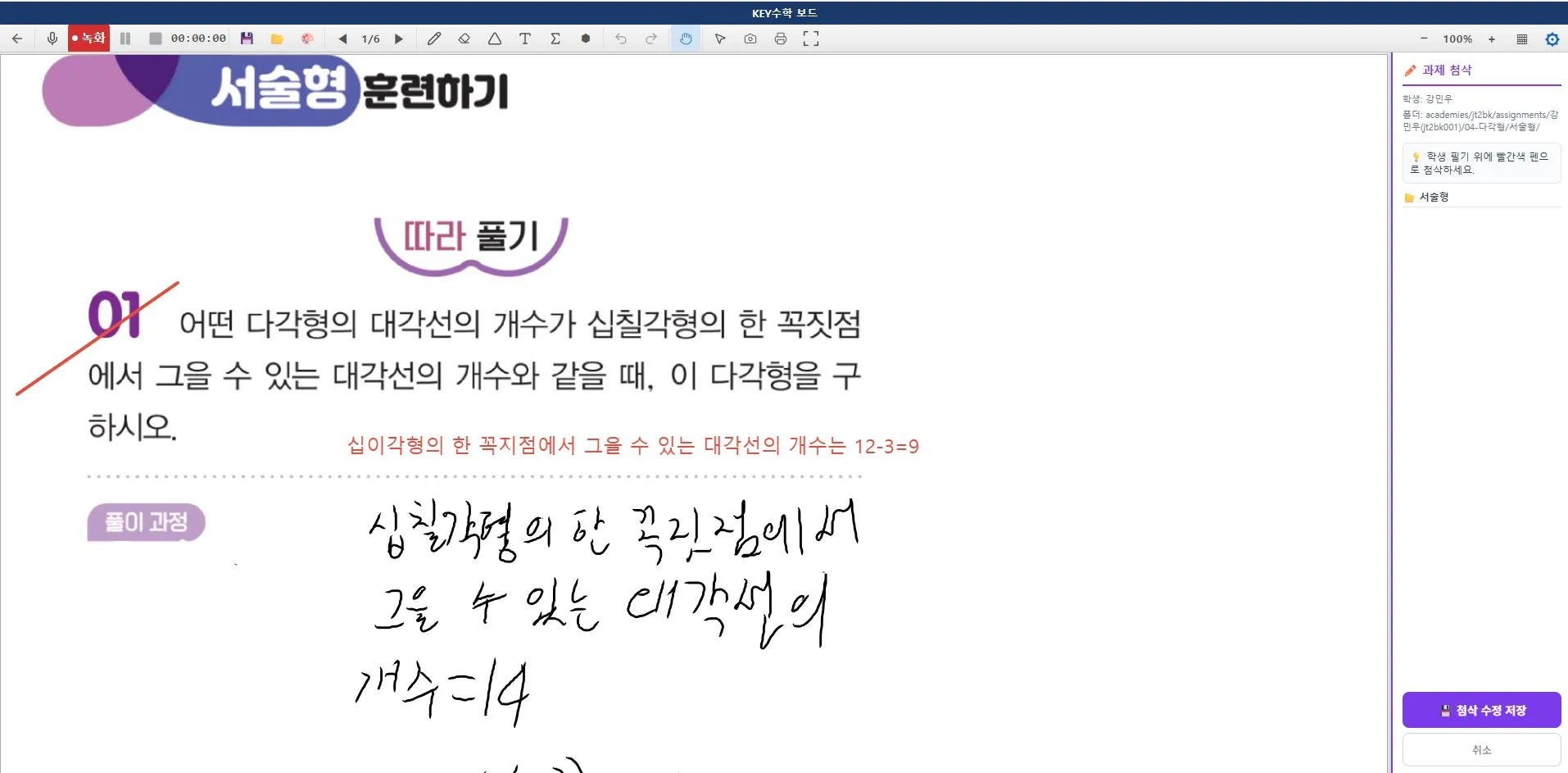
Points to consider when running an online academy
For academy directors and teachers, clearly explaining the difference between an online academy and recorded video lectures to parents helps build trust. You need to emphasize that it is not a service that simply plays videos, but one that offers live classes together with systematic learning management.
In this context, the ClassCanvas live class program supports an individual mode based on one board per student, so classes can be run to match each student's progress and level of understanding. Its one-on-one feedback and screen share features also let you ask questions and give feedback in real time, unlike recorded lectures.
Systematically keeping track of assignments, attendance and tests can be supported through the ClassCanvas learning management system. Video lectures, assignments, tests and attendance management are provided together, so parents can transparently see their child's learning status, and academies can reduce their management workload.
When running or enrolling in an online academy, checking whether it combines live classes with learning management is the standard for judging the biggest difference from recorded video lectures. ClassCanvas takes the approach of supporting both teaching and management on top of this structure.
Conclusion: finding the right approach for your child
The difference between an online academy and recorded video lectures comes down to "videos you watch alone" versus "live classes with management." For a child who studies well independently, recorded lectures alone may be enough, but for a child who needs management and motivation, an approach that combines live classes and learning management, like an online academy, may be a better fit.
As a parent, start by assessing your child's learning style, and use the checklist above when choosing an academy or service. If you run an academy, presenting live class and learning management features together, such as those in ClassCanvas, can help parents understand the value of an online academy more easily.
How to set up a remote academy
ClassCanvas learning management system
Phone inquiries: 1661-9155 (Korean only)
ClassCanvas: a total solution for online remote academies