AI even explains things now, so do we still need teachers?
When a student photographs a problem they don't understand and uploads it, the solution steps appear within seconds. AI also handles concept explanations and similar-problem recommendations with ease. If you are a director running an online or remote academy, or a teacher working in one, you have probably wondered at least once: "AI does this so well, so what should I be doing?"
To get straight to the point, the teacher's role isn't disappearing; it is changing. If you separate what AI does well from what only people can do, the direction becomes a little clearer.
What AI does well, and what people do well
Where AI takes over repeated explanations and material preparation
Tasks that follow a set pattern, such as solving problems, summarizing concepts, and generating materials by problem type, are handled quickly and accurately by AI. From the perspective of an online academy teacher, there is a lot of room to use AI in the following tasks.
Automatically generating problems by unit and sorting them by difficulty
Drafting basic concept explanation videos or text
Providing first-pass answers to student questions
Writing recurring notices and announcement messages
If you hand these tasks to AI, teachers can cut down on class preparation time and focus on more important work. In fact, at many remote academies, using AI for classes starts at the material preparation stage.
What only teachers can do
On the other hand, the following areas are still up to people.
Motivation — Persuading students why they should study and what their current effort will lead to comes from relationships, not data.
Individual feedback — Even the same wrong answer has a different cause for each student. Whether it's because they don't know the concept, made a careless mistake, or lost focus can only be figured out by talking with them directly.
Study habit management — AI can't build the habit of attending consistently and keeping up with assignments for students. It takes a person's attention and check-ins.
In the end, the more AI is used in academy classes, the more a teacher's center of gravity shifts from being "the person who explains" to being "the person who manages and motivates."
Why the change in roles matters even more at online remote academies
Unlike in-person academies, online remote academies make it hard to directly observe students' expressions, focus, and daily patterns. For that reason, if teachers don't communicate and manage deliberately, students can easily slacken.
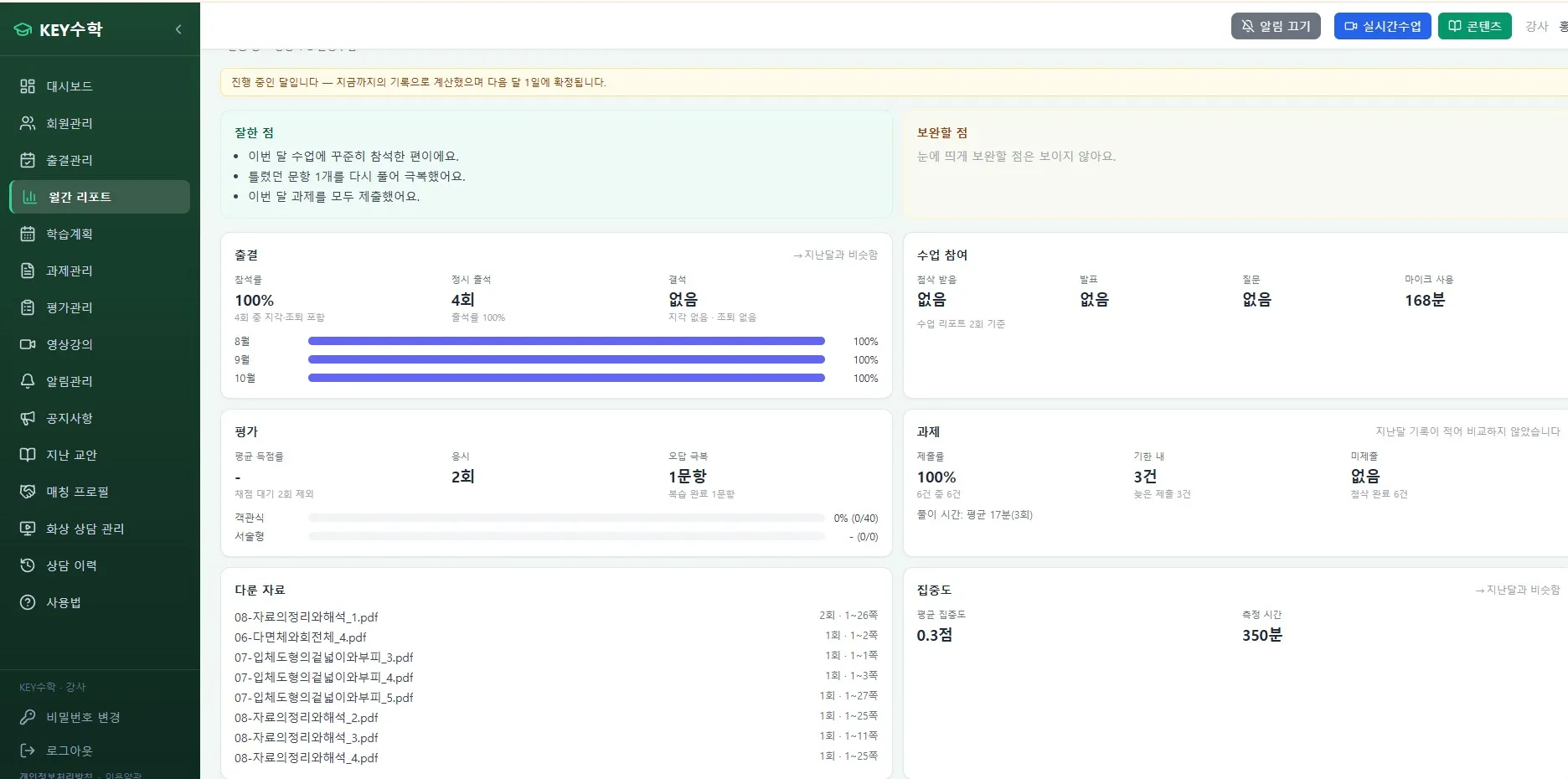
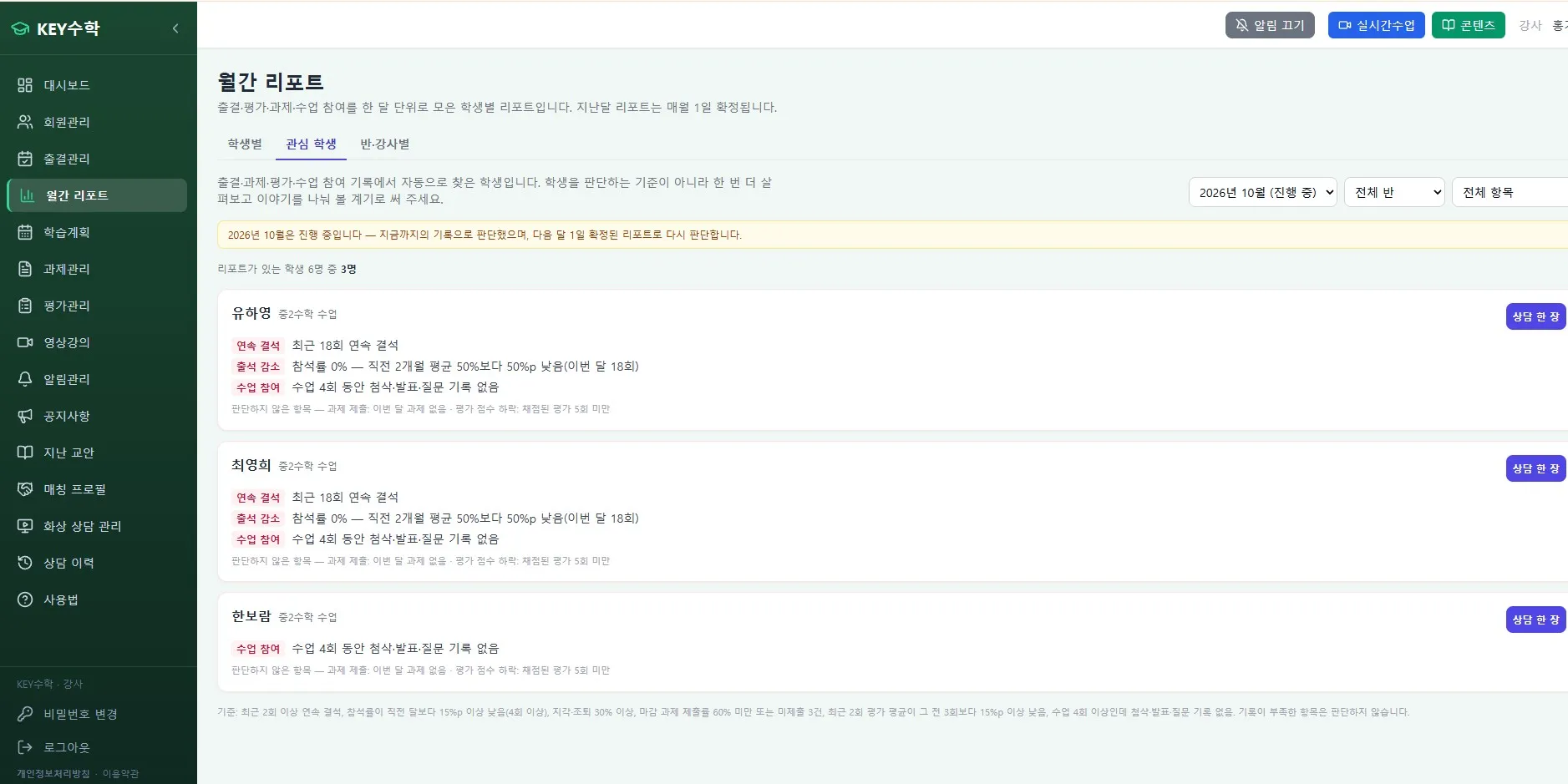
This is where the role of an academy management system grows. If you run an online remote academy, you need a tool that lets you see attendance management, assignment submission status, and learning data at a glance. Providing classes alone isn't enough: the new role of an online remote academy teacher is to check with data whether students are participating steadily and to step in at the right moment.
What the change in roles looks like in practice with ClassCanvas
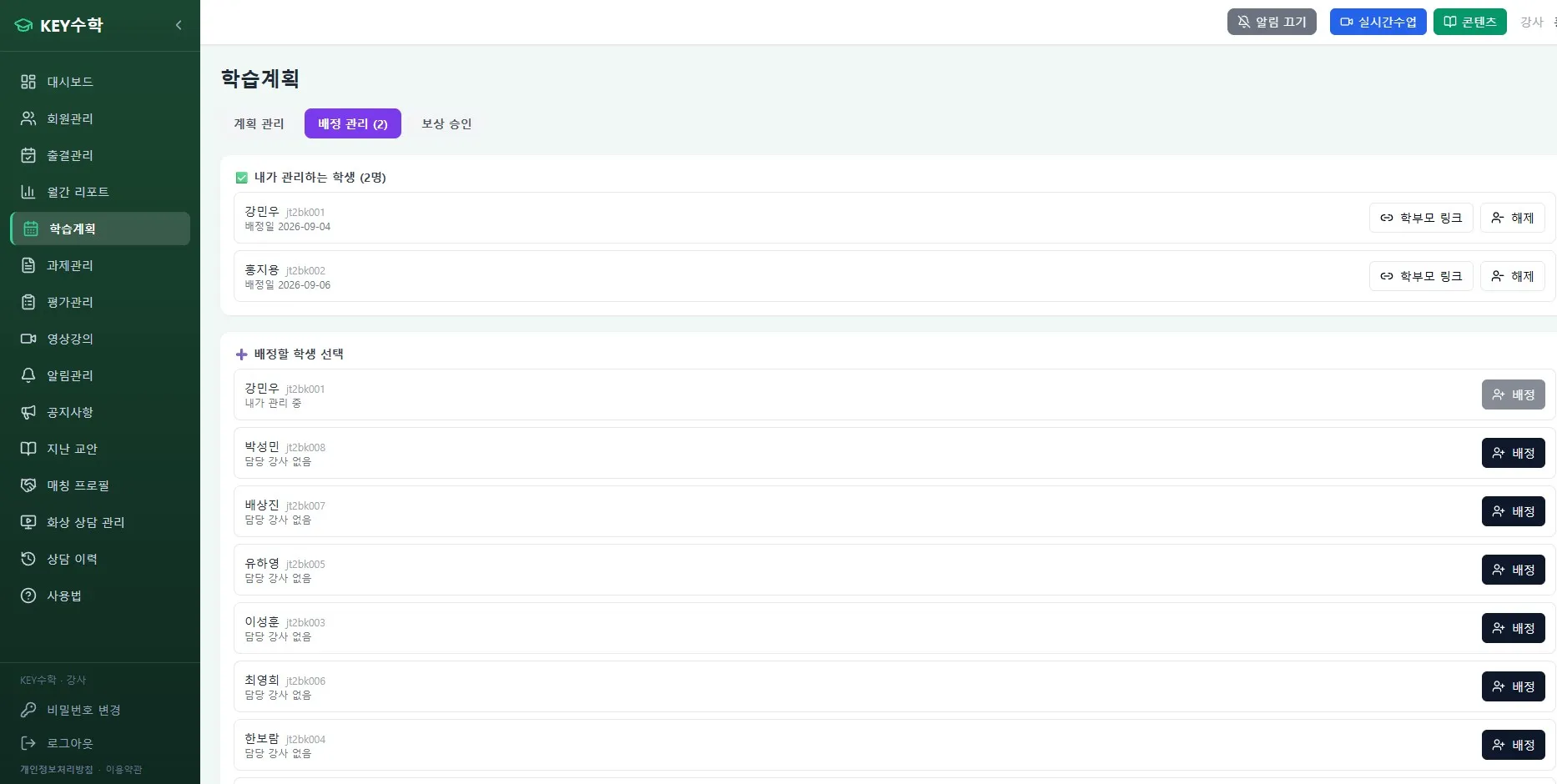
The ClassCanvas live class program supports one board per student and an individual mode, so teachers can keep the whole-class explanation concise and spend more time on individual feedback tailored to each student's level of understanding. Even if explanations are replaced by AI or pre-recorded materials, giving feedback by looking at the work students solved themselves remains the teacher's role.
In addition, the ClassCanvas learning management system provides video lessons, assignments, tests, and attendance management together, helping online academy operators understand each student's learning flow through data. Attendance management, for example, goes beyond simply checking whether students logged in: changes in attendance patterns can be used to spot changes in a student's learning attitude early.
Points to check on the ground
If you run an online remote academy or work as a teacher at one, it helps to go through the items below.
Are you replacing concepts that need repeated explanation with AI or recorded videos?
Are you deliberately setting aside time for individual feedback?
Are you using attendance management data as material for student counseling?
Are you catching signs of students disengaging early through your academy management system?
Are you balancing the use of AI in classes with the role of people?
This checklist doesn't call for a dramatic change. It is enough to take one more look at your current way of teaching and separate what you can hand over to AI from what people must still handle.
Wrapping up
More use of AI in academy classes doesn't mean fewer places for teachers. It is closer to the opposite: teachers get breathing room to move away from repetitive explanation work and focus more on each individual student. For those running online and remote academies, the way the academy is managed needs to be adjusted along with this change.
ClassCanvas can be used as a tool that supports this shift through its live class and learning management features. If you run an online remote academy, we recommend taking a moment to check how your current class structure divides the roles of AI and people.
How to set up a remote academy
ClassCanvas learning management
Phone inquiries: 1661-9155
ClassCanvas: a total solution for online remote academies