Running only an academy is getting harder, and you already know that
Hearing the latest news from the academy world probably weighs on you. When directors say, "You can't make money with an academy alone," it doesn't feel like someone else's story, does it? The number of students keeps falling, and in the 2025 survey on private education spending for elementary, middle and high school, released in March 2026 by the Ministry of Education and the national data agency, total private education spending also fell 5.7% from the year before. Rent and labor costs are rising, but tuition is tied to a per-minute rate and can't be raised freely. I felt uneasy reading a news story about "two-job directors" who work another job in the morning and come to the academy in the afternoon.
Yet the harder things get, the more directors are looking beyond the limits of offline academies toward remote academies. Today, let's talk casually about why it's worth considering setting up a remote academy now, and how you can expand while keeping your existing academy.

Why offline academies alone hit a limit
As the news reports show, the academy market is under structural strain right now.
Oversupply: the number of students is falling while academies and tutoring studios keep multiplying
A fixed-cost burden where nothing stops rising: rent, labor, even shuttle bus costs
The expansion of Neulbom School is reducing how much time children spend at academies in the first place
The structural weakness of small academies, which can't earn extra income from special lectures or online courses the way large academies can
What stands out in particular is that as young couples move out to the planned satellite cities, enrollment at established academy districts is shrinking naturally. A local, offline academy's revenue is ultimately tied to the population of its neighborhood. No matter how good your teaching is, you can only recruit students who live near the academy, and that becomes the ceiling on growth. To get past this limit, you need a structure that lets you enroll students from outside your area. That is exactly what a remote academy is.
Why remote academies deserve attention now
A remote academy is, literally, an academy that holds classes online without the constraints of a physical space. Compared with an offline academy, the advantages are quite clear.
The rent burden drops significantly. Freed from fixed costs such as shuttle buses, building rent and heating and cooling, your margin structure itself changes.
You can recruit students without regional limits. You're no longer at the mercy of the number of students in your neighborhood, and you can expand nationwide or even to a remote academy for adults.
Individual management can actually become more detailed. The news report said that "how carefully you manage students matters as much as how well you teach," and an online academy that combines live video classes with a learning management system can manage students in more detail than offline.
The formats you can run are also broad.
Supplementary subject classes for elementary, middle and high school students
Small-group classes such as English video tutoring or math video tutoring
Video lectures that teach many students at once
Language and certification courses for adults
A big advantage is that, unlike a tutoring studio, you aren't bound by floor-area limits, and you can set your schedule flexibly. If you already run an academy, you can also start by opening a remote academy alongside it, using your current curriculum and teaching staff as they are.
How to start setting up a remote academy
When it actually comes to starting an online business, you may not know where to begin. Just because it's an online academy doesn't mean you can operate without going through any procedures. A remote tutoring academy also has to be registered with the local office of education, and besides the paperwork, you need to prepare a live video class system and a way to manage attendance and progress as well. Let's go through it step by step.
Step 1: Prepare to register a remote tutoring academy
Registration basically requires a domain registration certificate, a server lease agreement, an office lease agreement, and an office floor plan. Of these, ClassCanvas issues the domain registration certificate and the server lease agreement when you submit a custom domain setup application. The order of steps, from preparing documents to receiving your registration certificate, is laid out in the 6 steps to setting up a remote academy. Requirements can differ slightly by region, so we recommend asking your local office of education in advance.
For whether to prepare as a remote tutoring academy or a remote lifelong education center, see the difference between a remote tutoring academy and a remote lifelong education center; for whether your home or an officetel can serve as the office, see Can a home or officetel be your remote academy registration office?; and for the recently changed registration rules, see Remote academy registration law amendment checklist.
Step 2: Design how you'll teach
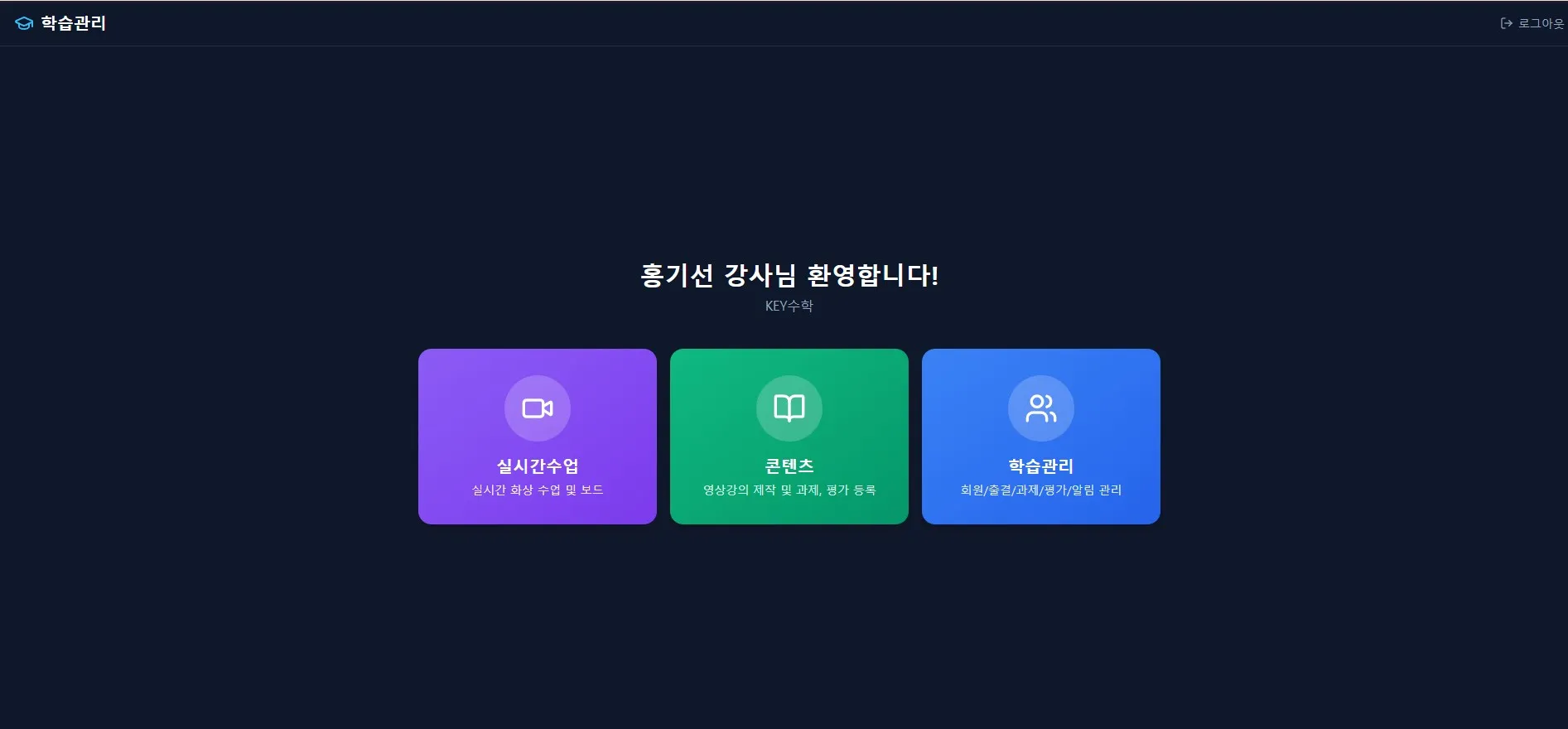
Rather than simply playing videos, a video class program that allows real-time interaction lets you manage students as closely as in offline classes. If the screen freezes or the sound is uneven during class, student satisfaction drops right away, so make sure the system is built for classes rather than being just a video conferencing tool. You could also give individual feedback using one board per student, or combine that with individual mode for level-based instruction.
Step 3: Build a learning management system
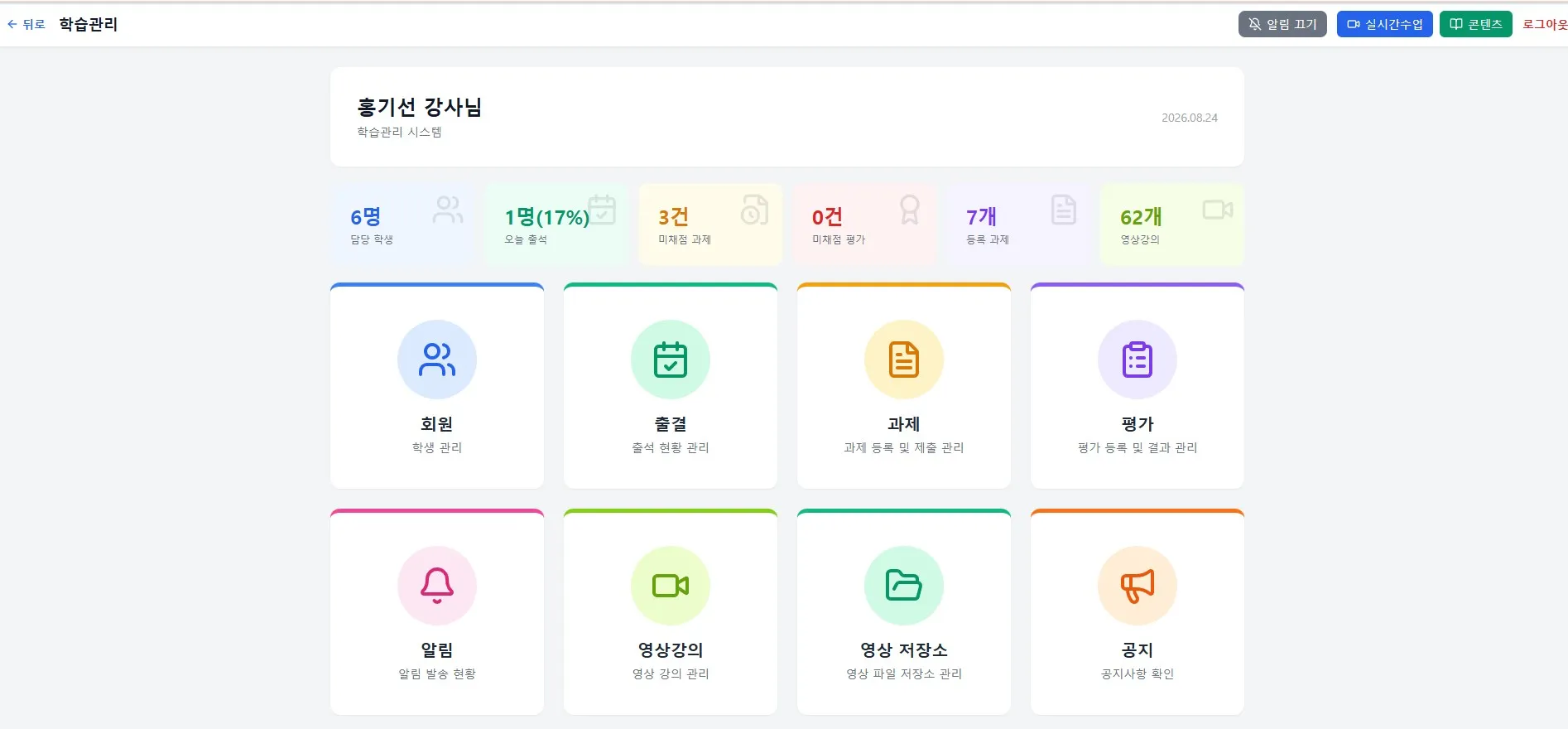
It's no exaggeration to say a remote academy's success ultimately depends on learning management. Since you're physically apart from students, you need to be able to keep track of each student's progress, assignment submissions and communication with parents in one place. If attendance, assignments and tests aren't managed systematically, parents may start to worry that their child is being neglected. With a learning management system that handles video lectures, assignments, tests and attendance in one place, you can show management that matches offline academies, and sometimes surpasses them.
Summed up as a checklist
Have you checked the registration documents for a remote tutoring academy (domain registration certificate, server lease agreement, office lease agreement, office floor plan)?
Do you have a real-time video class format and a system for individual feedback?
Can you manage attendance, assignments and tests in one place with a learning management system?
Do you have a structure for running your existing offline students and new online students together?
Do you have a way to let students outside your area know about your academy?
When the whole country is your stage, your recruitment strategy changes too
Because a remote academy has no regional limits, remember that your competing academies also extend nationwide. Neighborhood word of mouth alone won't bring in students, so you need to make your academy's own curriculum clear, keep managing student reviews, and keep promoting yourself through online channels such as a blog or the academy website for it to turn into actual enrollment.
Running offline and online together is also an option
You don't have to close your offline academy and switch completely to an online academy. A hybrid model that keeps the offline academy while also running a remote academy is entirely possible. For example, you could open extra classes in a video tutoring format on weekday evenings or during school breaks to earn side income, or build a new pool of students from outside your area.
What matters is that the structure of today's academy market is unlikely to change easily. The decline in the school-age population is already a set trend, and population movement to new towns will likely continue. In that case, rather than relying on a single offline location, adding a remote academy as one more channel can be a realistic way to spread risk.
Wrapping up
Now that holding on with an academy alone has become hard, why not look for a new breakthrough by setting up a remote academy instead of working two jobs? An online startup may sound grand, but in the end it's about extending the teaching know-how you already have into a new space called online. If you prepare the registration process, video classes, learning management and student recruitment step by step, you can go beyond the limits of your region and meet students from all over the country. Take your time preparing, but I do want to say that now is a good time to consider a remote academy.
Remote academy setup procedure
Inquiries: 1661-9155
ClassCanvas, the total solution for online remote academies